Ten Books I'm Circling This Fall
September 22, 2026 · 5 minutes read
Ten books I'm circling this fall, fiction and nonfiction, none of them comfort reads, for this week's Top Ten Tuesday.


I still haven’t finished my summer reading list. There’s a New Yorker cartoon for this exact situation: a woman stretched out on a towel by the bed, explaining up to her husband that she hasn’t gotten through her summer reading yet. That’s me, minus the towel, still picking through July’s stack while a new one piles up next to it. This week’s Top Ten Tuesday, hosted by Jana at That Artsy Reader Girl, asks for Top Ten Books on My Fall 2026 To-Read List, so here’s mine. Ten books I’m anticipating, no promises on when I’ll actually get to them.
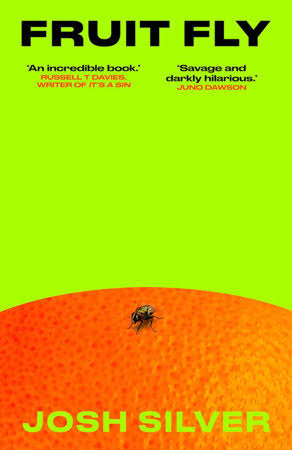
Fruit Fly by Josh Silver
This novel opens with Mallory Maddox, a celebrated novelist who hasn’t published in seven years. She meets Leo, a homeless, addicted young gay man surviving through sex work, and decides his life is the material that will get her career back. It follows what she does to get his story and what it costs him.
True North: On the Road in Canada by Paul Theroux
This travel narrative follows Theroux as he drives, rides trains, and talks to strangers across Canada’s coastlines and remote towns. There’s no plot to speak of, just the accumulation of real encounters as he tries to see a country that looks unified from a distance and turns out to be nothing of the kind up close.
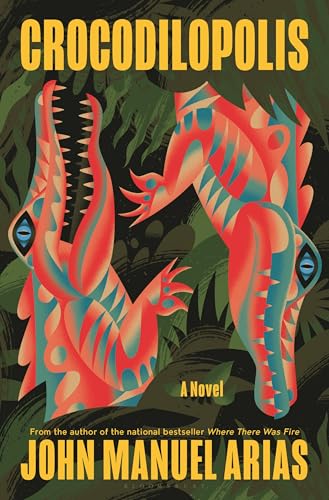
Crocodilopolis by John Manuel Arias
This novel is a fictional reckoning inside a Costa Rican political dynasty. Seth Oreamundo was heir to it until his younger brother Osario took his place and sent him into exile in DC. Seth is planning to go home and feed Osario to the river of crocodiles from their childhood. The book alternates between that plan and the brothers’ upbringing on the family’s coffee estate, tracing the rivalry back to its source.
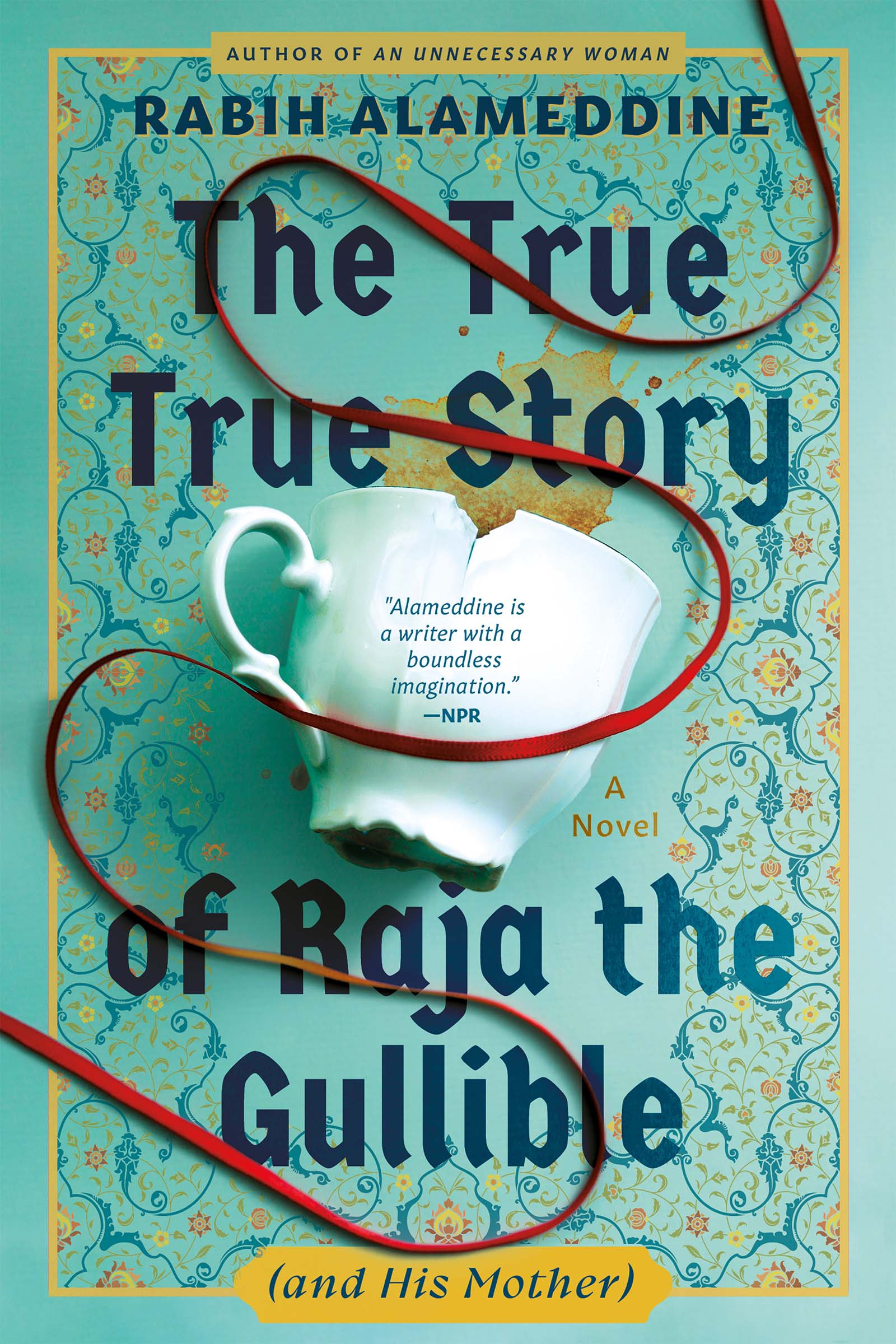
The True True Story of Raja the Gullible (and His Mother) by Rabih Alameddine
This novel follows Raja, sixty-three, gay, a philosophy teacher sharing a cramped Beirut apartment with his mother Zalfa. A writing residency in the US looks like his way out. Instead it drags him back through six decades of war, financial collapse, and the port explosion, and through a relationship with his mother that’s never been able to agree on what actually happened.
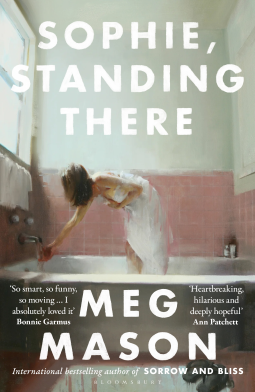
Sophie, Standing There by Meg Mason
This character-driven novel follows Sophie as she tries to hold together adulthood, friendship, and intimacy while managing the version of herself everyone else expects to see. It tracks what happens when the gap between that performance and what she’s actually feeling gets too wide to keep covering.
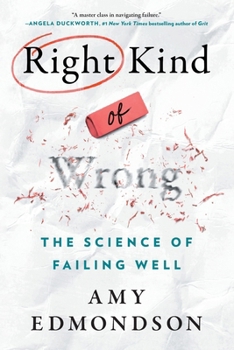
Right Kind of Wrong: The Science of Failing Well by Amy Edmondson
Edmondson’s framework for failure splits it into three types, each with its own lesson. Basic failures happen when there’s a known way to get something right and someone skips a step anyway; those are the ones to catch and prevent. Complex failures come from systems with too many moving parts for any one cause to explain, the kind you can reduce by catching small problems early but never fully eliminate. Intelligent failures are different: the undesired result of a real experiment in new territory, the only way to have learned what you just learned. The book’s real argument is that treating all three the same, with the same shame or the same shrug, is where most organizations go wrong.
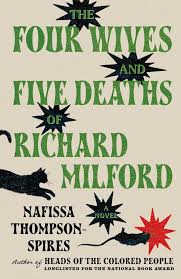
The Four Wives and Five Deaths of Richard Milford by Nafissa Thompson-Spires
This historical novel opens with Richard Milford dead, murdered in 1920s Oklahoma not long after the Tulsa Race Massacre, on the brink of the Depression and at the height of Prohibition. He was an infamous moonshiner and womanizer, and the four women who all called themselves his wife, Lally, Sophronia, Georgette, and Vivianne, are the top suspects. As each of them tells her version of what happened, the novel stops being a whodunit and turns into something more interesting: a book about how many different true stories one death can generate, and what that says about who gets to be believed.
Hannah Arendt: A Life of the Mind by Thomas Meyer
This intellectual biography traces Arendt from Königsberg to Paris, where she fled after being imprisoned by the Gestapo in 1933, to New York in 1941. Drawing on newly discovered archival material, Meyer follows her lifelong philosophical entanglement with Martin Heidegger and the years of thinking that led to The Origins of Totalitarianism. It’s a big, serious book about a thinker whose questions about power and truth have not gotten any less relevant.
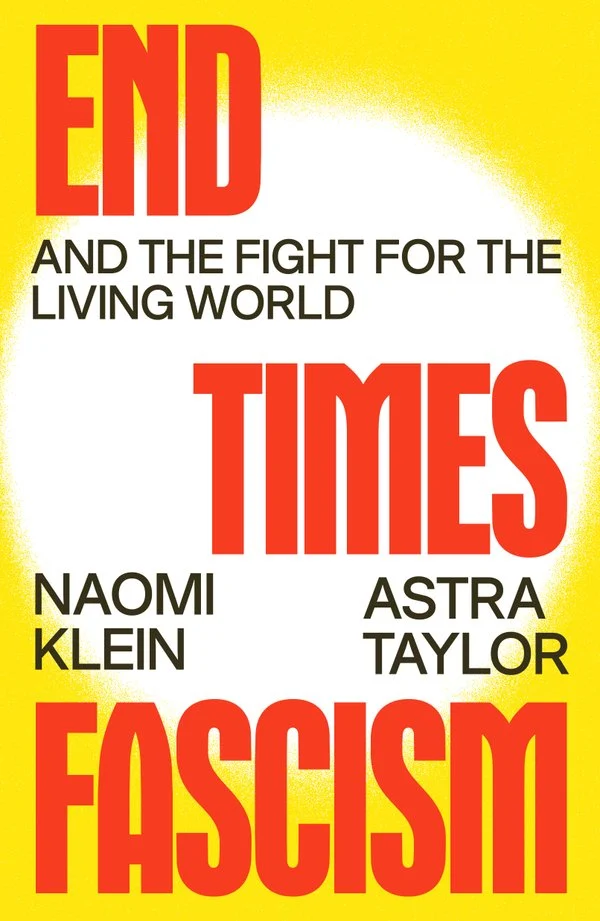
End Times Fascism: And the Fight for the Living World by Naomi Klein and Astra Taylor
This work of reporting has Klein and Taylor tracking the political and economic actors who’ve stopped trying to fix climate breakdown and inequality and started planning insulated futures instead: bunkers, private islands, Mars, walled nationalism, apocalypse religion, tech survivalism. They connect all of it into one story, then turn to the movements and solidarity built as the alternative.
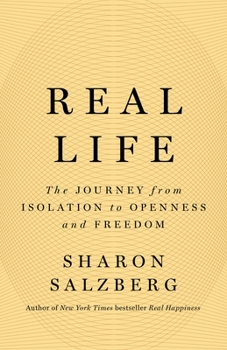
Real Life: The Journey from Isolation to Openness by Sharon Salzberg
This book follows the path from disconnection toward openness, using Buddhist teaching, meditation, and lived struggles with loneliness and self-protection to map how people get cut off and how attention and compassion can start to change that.
Salzberg has been doing this work for over fifty years, since co-founding the Insight Meditation Society in Barre, Massachusetts in 1974 with Jack Kornfield and Joseph Goldstein. Real Life is late-career Salzberg, someone who has spent five decades thinking about isolation and connection, writing about it again now, after everything.
This post is part of the Top Ten Tuesday book blog link up hosted by Jana at That Artsy Reader Girl. This week’s topic: Top Ten Books on My Fall 2026 To-Read List.
Respond
Tags
Generation Priced Out: Who Gets To Live In The New Urban America? by Randy Shaw
The challenges around housing in urban areas are about NIMBY politics and the generation that owns everything, according to Randy Shaw. Stories from San Francisco, New York, Seattle, Austin, LA and Denver illuminate.
Helen of Nowhere by Makenna Goodman
Helen had money. You betcha. She used to say her life was like the inside of a golden egg, and that people with normal shells wanted nothing more than to be golden. And instead of thinking about their yolks or whites, they thought only of their shells and how they were missing some kind of decoration, whereas she had the decoration and wanted it to be normal, like theirs.
Simply More by Cynthia Erivo
With music everywhere, home felt like a place I belonged. I could ask all the questions in the world and was never shamed for my curiosity. I could bring in as much music as I wanted and play it wherever and whenever I wanted.